Inclusive engagement: Diversity as a strength!
Civic engagement belongs to everyone. And yet recent studies show that people with disabilities, people with a migrant background and people with low levels of formal education are significantly less likely to get involved.
External barriers often stand in the way, such as architectural obstacles, complex language or tasks that are too narrowly defined. All too often, these people are seen merely as the target group for support services, rather than as active contributors.
This must change. This page shows how you can make your community engagement more inclusive. The focus is on people with disabilities. However, many of the tips also help to break down other barriers and encourage more people to get involved.
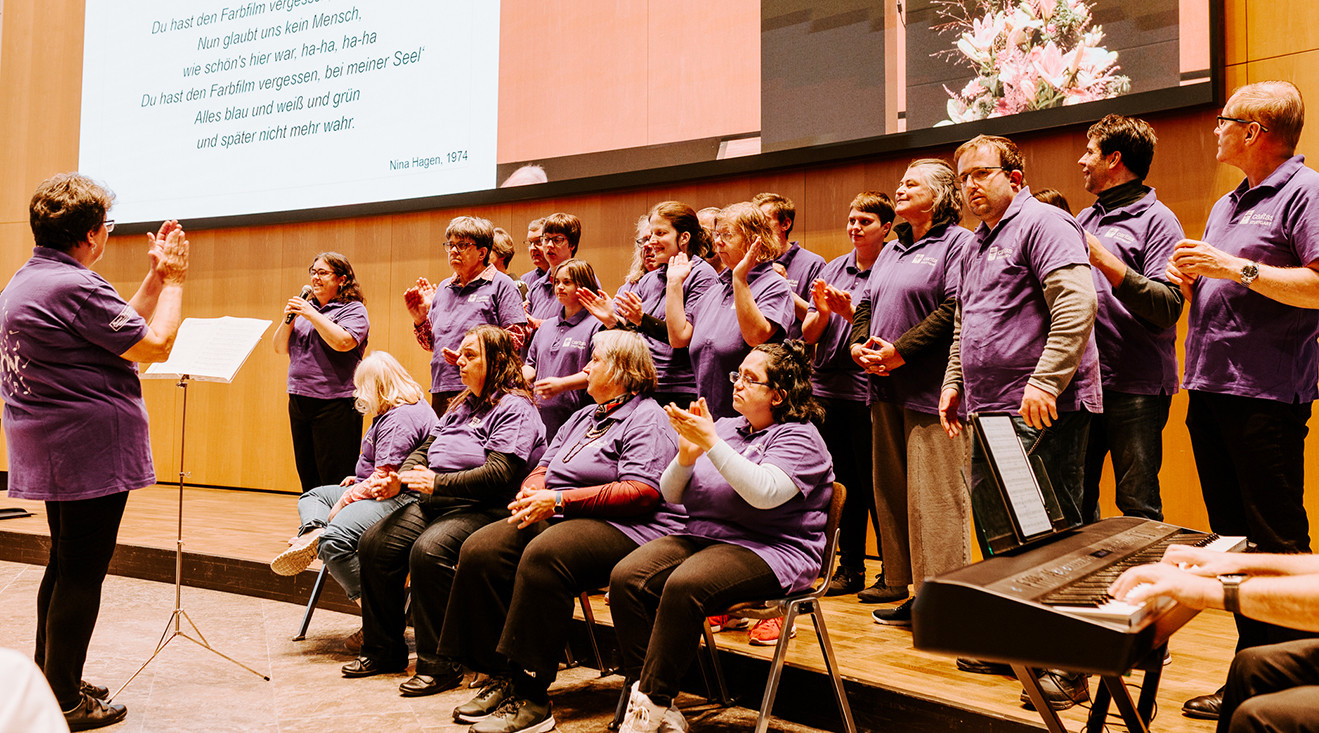
Would you like to get involved but aren’t sure whether any of the opportunities are right for you? Get in touch with the organisations directly. Many roles can be tailored to suit you.
If you have any ideas on how your work can become more inclusive, please share them. Practical feedback helps organisations to identify barriers more effectively.
If you’re facing a barrier yourself, it’s best to raise it directly where it’s occurring – for example, with your organisation. If that doesn’t work, or if you’d like some support, the City of Stuttgart’s Disability Officer will be happy to help.
Thinking inclusively, breaking down barriers
Inclusive engagement means that people are not merely seen as the target group for support. They play an active role in shaping initiatives, take on responsibility and contribute their experiences.
For organisations, this often begins with simple questions: Who haven’t we been reaching so far? Who feels welcome? What barriers exist in terms of access, tasks, language or events?
Not everything needs to be changed straight away. The important thing is to get started, to listen and to work with people to identify what makes participation easier.
It’s the first step that counts
Inclusive engagement doesn’t happen overnight. It often starts with an honest question, a conversation or a small change: a clearer job description, a more accessible meeting place, a designated point of contact or open feedback.
It is important to involve people who experience these barriers first-hand. By asking questions, listening and developing solutions together, you can make participation more accessible, step by step.
If you’d like to make participation and communication more inclusive, these pages will help you:
Get your bearings quickly
Here you’ll find the most important information for