

Creating spaces for community engagement
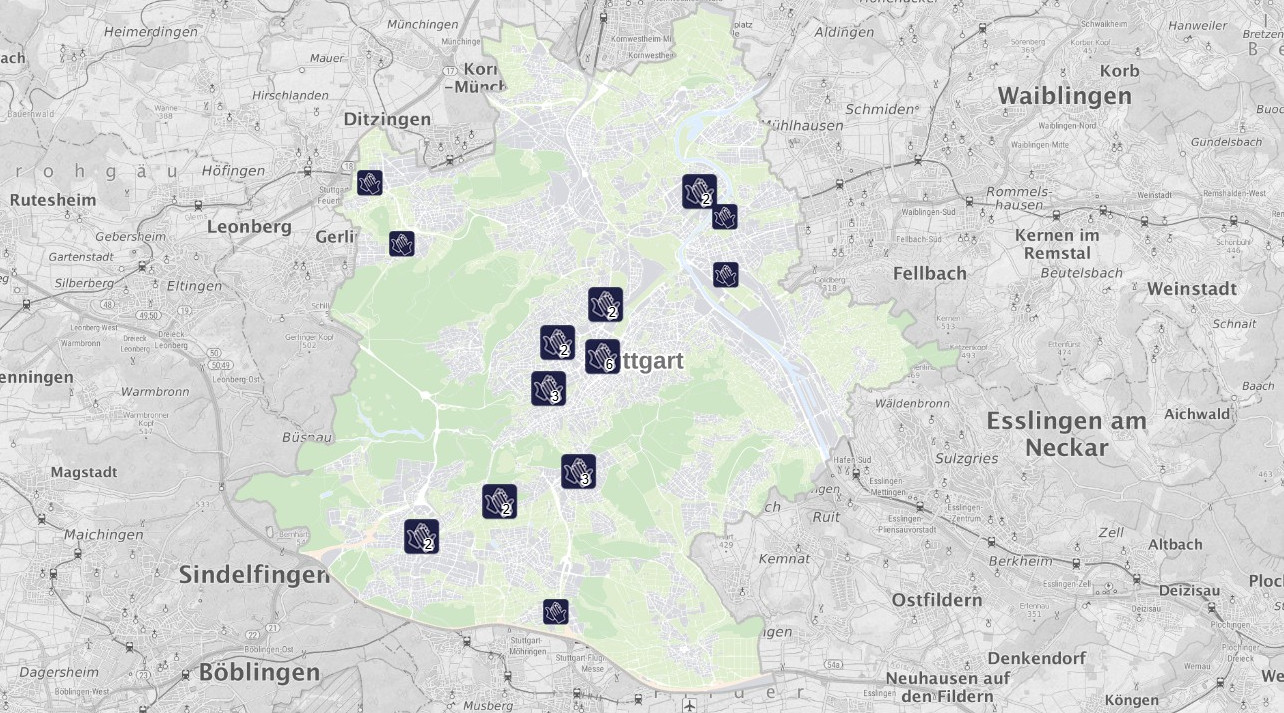
Community engagement needs places where people can come together, develop ideas and take action together. As part of the ‘Tour of Good Community Engagement Spaces’, 27 such spaces in Stuttgart were visited. The tour also addressed the question: what helps ensure that spaces for community engagement function effectively?
This page summarises suggestions for groups, initiatives and organisations. It is not a list of mandatory tasks. Often, all that is needed is an easily accessible venue where people feel welcome and can work together without complications.
Not every space has to do everything
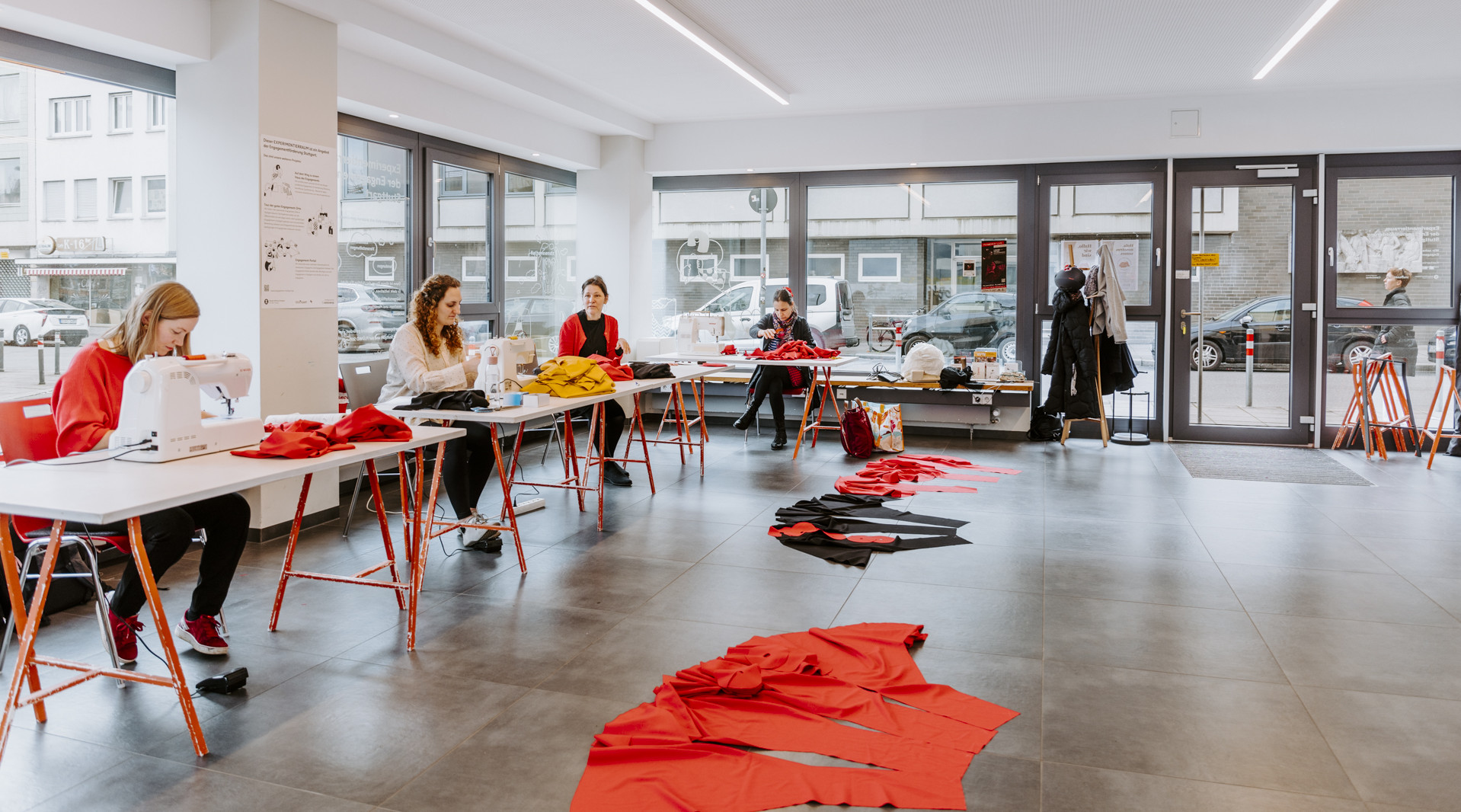
A community space can be many things: a group room, a neighbourhood meeting place, an office, a workshop, a garden, an events venue or a space used by several initiatives.
What a space needs always depends on who uses it and what it is used for. A space for confidential counselling requires different conditions to a space for exercise, communal cooking, events or open meetings.
That is why designing community spaces is not about meeting as many requirements as possible. The more important question is: what do the local people and organisations really need?
Clarify the intended use first, then design the space
Before you decide on furniture, fittings or the layout, it’s helpful to ask a few simple questions:
- Who will be using the room?
- What is the room used for?
- When will the room be used?
- What needs to work well there?
- Who should feel welcome there?
- What can stay the same?
- What should be changed?
Often, even small adjustments can have a big impact: clear information, flexible furniture, good lighting, a quiet area for conversation or easy access to materials.
How spaces can help
Good spaces for engagement create opportunities for people to meet and facilitate collaboration. They can help people feel welcome, take on responsibility and contribute their own ideas.
Depending on the location, target group and activities on offer, spaces can fulfil different purposes. Some places are open and lively. Others offer tranquillity, shelter or a setting for confidential conversations. Some spaces are used on a permanent basis, whilst others are only used for individual meetings, projects or events.
It is helpful if spaces are easily accessible, can be reached conveniently and are suited to local community involvement. This also means that people should be able to move about, exchange ideas and help shape the space without feeling excluded or under pressure.
Questions about interior design
The following questions will help you when you’re using, altering or redesigning a space. You don’t have to answer or fulfil all of them. What matters most is what suits your venue, the services you offer and the people who use the space.
Thinking about the different areas within a space
An engagement space often consists of several areas. Some are clearly separated from one another, whilst others emerge through use: a place to settle in, a corner for conversations, a table for group work, storage space for materials or an area for events.
Such areas are also known as spatial zones. They help you to think about a space in practical terms: what happens where? What needs to be close to one another? Where is peace and quiet, space or equipment required?
Not every community space needs all of these areas. The overview in the following section shows which spatial zones may be useful depending on the activities on offer.
Small changes can make a big difference
A good community space isn’t created simply because it’s planned, fitted out or refurbished. Above all, it comes into being through use: through people who come together there, take responsibility and breathe life into the space.
That’s why it’s worth taking a regular look: what’s working well? What’s missing? What can be improved with minimal effort? Often, it’s small changes that make a space more accessible, friendlier or easier to use.
If you’re looking for a space or would like to see some more examples, these pages will help you:
Get your bearings quickly
Here you’ll find the most important information for