The path to creating your own proposal
Whether you want to launch a new project or develop an existing one, there’s a journey behind every good initiative. And it doesn’t start with a ready-made plan, but with a mindset.
This is the place for organisations looking to develop new services, as well as for committed individuals who want to understand how good ideas emerge in the process.
The building blocks of a good proposal
A good proposal rarely comes about all at once. It develops in several stages, from establishing a shared approach, through the exchange of ideas, to the concrete formulation of tasks. The following building blocks show what is important along this journey.
Every organisation has an invisible blueprint – a blend of history, attitudes and beliefs that determines how decisions are made. Before a new proposal is drawn up, it is worth taking a look at this blueprint. What drives us? What do we stand for, even when no one is watching?
A shared vision or a guiding principle put into practice are useful tools. They help us make decisions quickly, without having to renegotiate every issue from scratch. Organisations that understand their roots often make bolder decisions. This gives the development of new projects a clear direction and creates reliability internally and provides guidance externally.
Take the time to review your own mission statement or shared values regularly. Not as a bureaucratic obligation, but as a genuine team discussion. What still applies? What has changed? This reflection strengthens cohesion and makes decision-making easier.
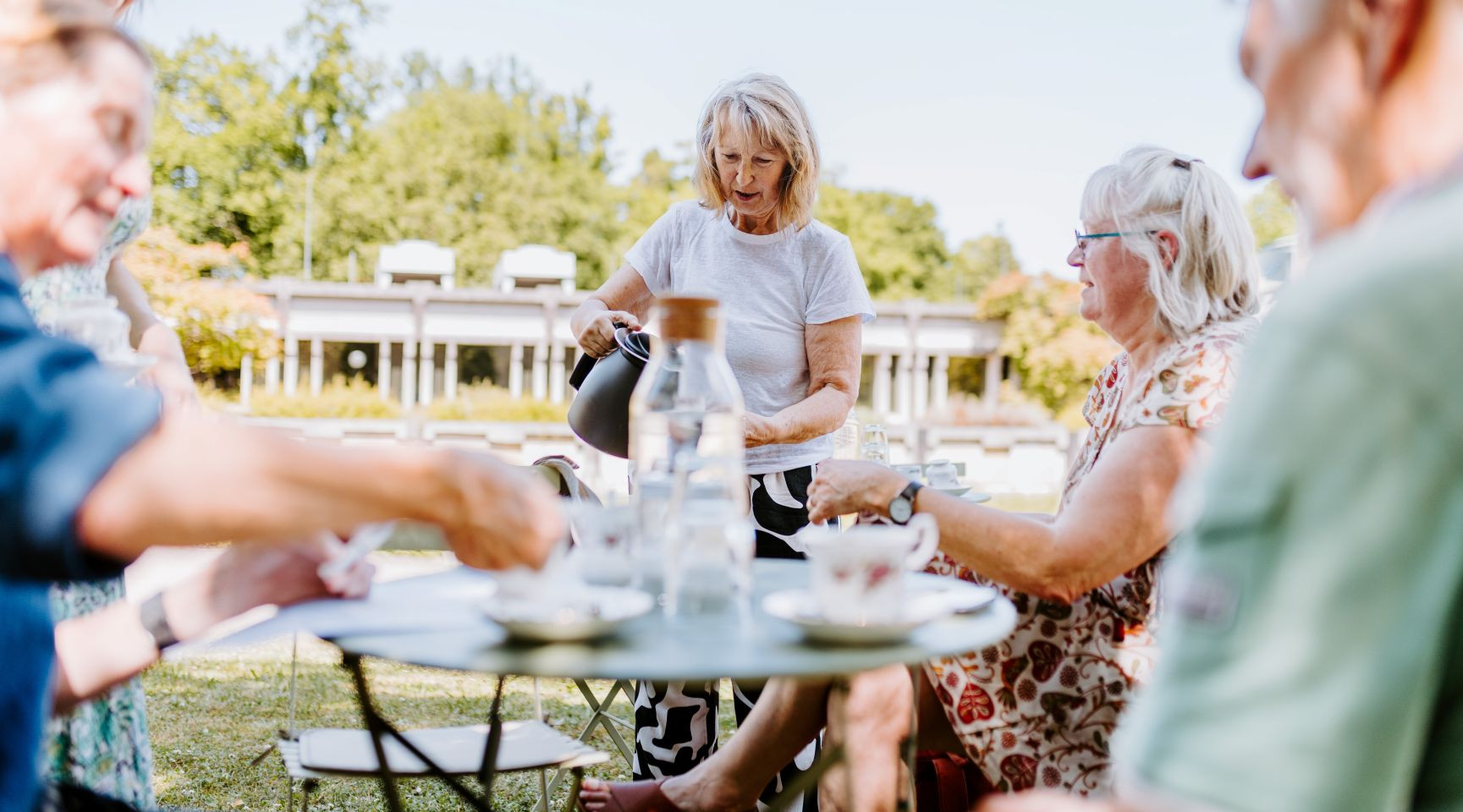
The best ideas for new initiatives rarely arise from formal planning processes alone. More often than not, it is spontaneous inspiration, feedback from the field or direct dialogue between staff and volunteers that provides the impetus. Sometimes an idea pops up over a cup of coffee when someone mentions what’s missing in the neighbourhood. Or they arise from a spontaneous enquiry, a ‘lightbulb moment’ during a project, or an observation that someone has been pondering for a long time.
The crucial question, then, is not how to come up with good ideas, but whether there are spaces where ideas can be voiced in the first place. Organisations that actively listen – to volunteers, staff and the target group itself – are more innovative in the long term and better attuned to actual needs.
This can be as simple as asking an open-ended question at the end of a meeting. Or as structured as a regular ideas session or a forum for sharing experiences. What matters is the message behind it: your perspective counts, and we take it seriously.
Recent studies on volunteering show that organisations must become more flexible, digital and participatory if they are to continue attracting and retaining volunteers in the future. Creating spaces for ideas is therefore not just a nice extra, but a prerequisite for sustainable organisations.
Why the future of volunteering is so important right now
Share your observations and ideas. Even a small piece of feedback from the field can be the catalyst for something new. Nobody knows day-to-day life better than the people right in the thick of it.
Create regular opportunities where ideas can be voiced without an immediate decision being expected. An open-ended question at the end of a meeting is often enough.
The most solid foundation for a service is, and always will be, genuine need. It is not a reaction to demand simply because others are doing it too, or because funding is currently available. A proactive, needs-based approach means getting out there, listening and asking questions – whether through a neighbourhood survey, an open discussion, or simply by taking a close look at what is working well in existing initiatives and what isn’t.
And the exciting thing about this is that it often benefits not only the target group but also the organisation itself. Those who are committed to creating a liveable neighbourhood end up living there themselves.
An organisation that understands its needs knows where it is needed and can really make a difference there.
Check regularly whether the existing services still meet actual needs. These don’t have to be elaborate surveys. An open discussion with the target group or those involved often provides valuable insights.
A viable concept begins with openness. Without closing the door to new topics, new ideas and external input. Those who are prepared to take up the ideas of others broaden their horizons rather than narrowing them.
Flexible concepts are not off-the-shelf solutions. They describe a unique, tailored offering, tailored to the specific target group and subject area. It is precisely this that often gives rise to something new. Target groups that previously had nothing to do with one another connect, and new ideas can emerge from this encounter.
In doing so, it’s simply a matter of getting stuck in. Experimenting, improvising, trial and error. A concept doesn’t have to anticipate every eventuality from the outset. It is in flux and continues to evolve through practical application. And once an initiative has fulfilled its purpose, it is perfectly acceptable for it to come to an end. This creates space for the next one.
One important prerequisite remains: involving those committed to the cause in the planning from the very beginning. Concepts developed collaboratively often find greater support and thus have a solid foundation for getting off the ground.
Learn how to involve those committed to the cause right from the start
If you have an idea, put it forward. Even half-formed thoughts are valuable. The best concepts emerge through discussion, not at a desk.
Involve volunteers right from the start. Those who have helped shape the idea will also take ownership of the outcome.
Once an idea has been taken up and a proposal developed, the next question arises: how can the associated tasks be structured in such a way that people are keen to get involved and can do so in a way that suits them? The answer lies in a flexible approach to task design that is tailored to the individual strengths of those involved.
Above all, ‘flexible’ here refers to time. Volunteering can be long-term or time-limited, regular or one-off. Whether someone contributes for a year, steps in on an hourly basis or gets involved from time to time, every form of involvement is valued. It is precisely this openness that makes it easier to integrate volunteering into a busy everyday life.
A clear job description helps in this regard. The more precisely a task is defined – including what it does and does not entail – the greater the confidence that a small commitment will not turn into an open-ended obligation. At the same time, part of a task may involve contributing one’s own ideas, helping to shape the work, or applying one’s own expertise. Some volunteers are looking for exactly that, whilst others prefer clearly defined tasks.
‘Resource-oriented’ means that tasks are tailored to what volunteers bring to the table – their skills, interests and even their age. Anyone who wishes to get involved in different areas should have the opportunity to do so. This can even lead to changes in an organisation’s structure and the services it offers over time.
And if something changes – if a programme comes to an end or a role is no longer required – this does not automatically mean the end of their involvement. It is often possible to find a new role, either in a different area or in a different form. The key point is that volunteers have a say in how they wish to get involved.
The 2024 Volunteering Survey confirms that volunteers who have found the right balance for themselves stay on in the long term. Almost half carry out their activities at least once a week, and more than two-thirds want to continue their involvement as before.
Say what you’d like to contribute and what you’d prefer not to. A clear agreement from the outset prevents you from being overburdened and lays the foundation for a role that really suits you.
Describe the tasks as specifically as possible, but leave room for development. People who know exactly what they’re getting into will volunteer with greater confidence and stay on board for longer.
A visit to Zeit zum Tanzen e.V.
As part of the “Tour of Great Places for Volunteering”, videos were filmed at four locations. Here you can get an insight into this exciting project.
Get your bearings quickly
Here you’ll find the most important information for